
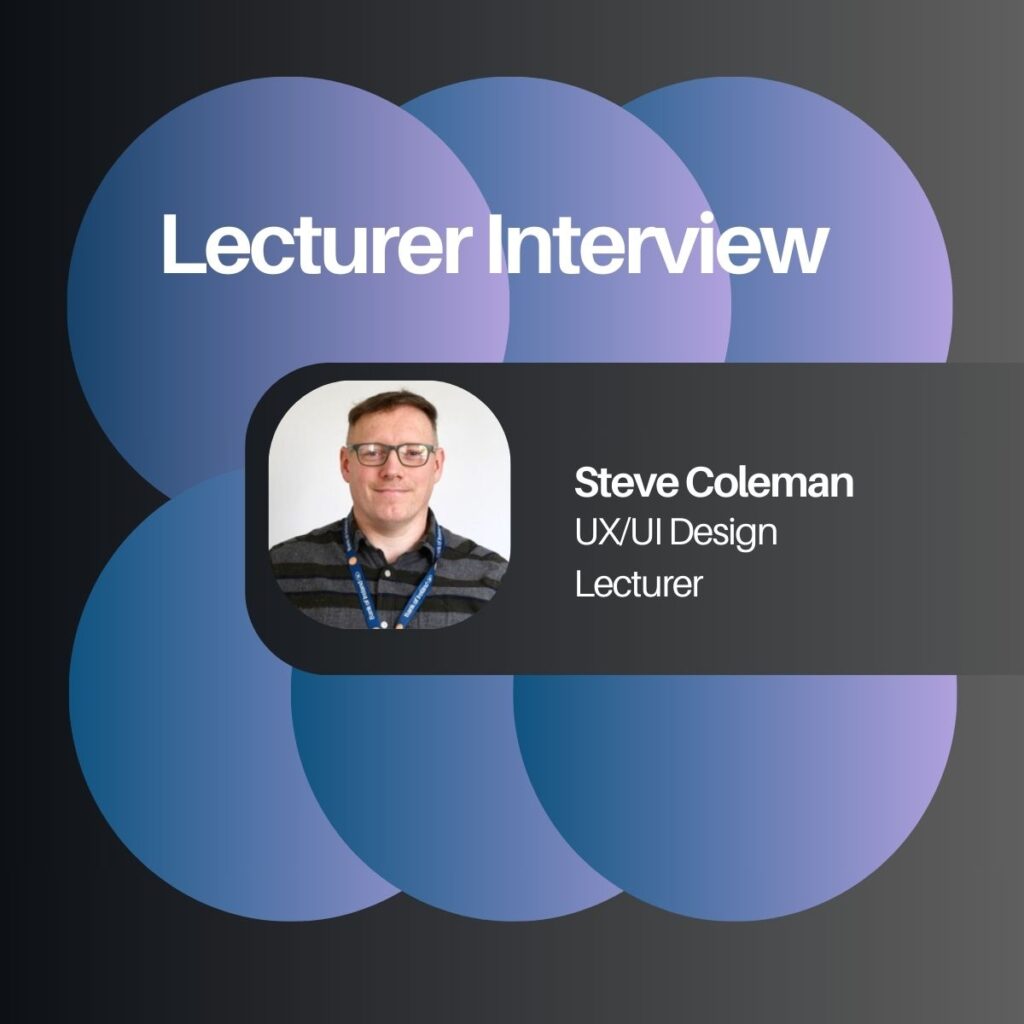
Steve Coleman, UX/UI Design Lecturer at Business Technology Academy and Senior UX/UI Architect at Aviva, recently spoke to us about how AI is being used in the workplace by UX/UI Designers.
In the interview Steve discusses how AI has transitioned from a novelty to a vital support tool for designers. He emphasised that while AI significantly enhances capabilities—allowing for greater efficiency and more strategic focus—it cannot replace the human heart of the craft. Fundamental skills such as Design Thinking, empathy, and deep user research remain as essential as ever to creating meaningful, human-centric work.
What is your background in UX/UI Design?
I’m a UX/UI designer with 10 years of experience designing digital products across web and mobile platforms. My background includes working closely with cross-functional teams—product managers, developers, and stakeholders—to deliver user-centered solutions that balance business goals with real user needs. Over the years, I’ve been involved in the full design lifecycle, from discovery and research through wireframing, prototyping, testing, and final UI execution.
What made you interested in a career in UX/UI Design?
I was drawn to UX/UI design because it combines problem-solving, creativity, and empathy. Early on, I became interested in understanding why people struggle with certain products and how thoughtful design could remove friction. UX gave me a way to advocate for users while still working within real-world constraints like timelines, technology, and business objectives.
How are UX/UI Designers using AI in the workplace?
AI has become a valuable support tool in my workflow. Designers are using AI to help summarize research findings, analyze user feedback, generate early design concepts, speed up content creation, and even assist with accessibility checks. While AI increases efficiency, it’s most effective when paired with a designer’s experience, judgment, and understanding of user behavior.
Are core skills like Design Thinking, User Research, and others still needed?
Yes—those core skills are more important than ever. Design Thinking, user research, usability testing, information architecture, interaction design, accessibility, and strong communication skills remain foundational.
Will AI replace or assist UX/UI Designers?
AI will assist UX/UI designers, not replace them. Design is inherently human-centered. It requires empathy, ethical judgment, collaboration, and contextual understanding—areas where human designers excel. Designers who embrace AI as a tool will be better positioned to focus on higher-level strategy and problem-solving.
Why should someone consider a career in UX/UI Design?
UX/UI design is a rewarding career because it allows you to make a tangible impact on how people experience technology. It offers a strong balance of creativity and analytical thinking, ongoing learning opportunities, and the chance to work across industries. For anyone who enjoys solving problems, collaborating with others, and improving everyday experiences, UX/UI design is a compelling career path.
To learn more about Business Technology Academy’s UX/UI Design + AI Course you can check out the programme in the Courses page
Business Technology Academy is a member of Aontas, the Irish National Adult Learning Organisation, Cyber Ireland, Ireland’s Cyber Security Industry Association and is accredited by the European Association for Higher Education